Quick answer
AT advisor or AT assessor: what is the distinction?
For mid-cost assistive technology, NDIS guidance accepts written evidence from an allied health practitioner or another appropriate AT advisor; a formal high-cost assessment is not automatically required. That does not remove the need for individual suitability, risk advice or evidence supporting the purchase.
Start with the NDIS funding overviewDo I need an OT report for an NDIS exoskeleton?
Exo Motion Pro is priced in the mid-cost band. An advisor's written recommendation may be a letter, email or report. The more formal assessor pathway applies to high-cost equipment over A$15,000. The NDIS definitions and evidence guidance explain the distinction.
Do not turn that distinction into a claim that no assessment is needed. Risk, function and the proposed activity still matter. An appropriate professional should decide what review is needed for the intended wearer. A supplier demonstration is not a substitute, and a low purchase price is not evidence that an item is low risk.
Ask your own advisor whether wearable hip assistance is relevant to your goals before arranging a demonstration. The person may instead need review of an existing aid, a different device or another support. A useful decision can be to not proceed.
What does reasonable and necessary mean here?
The NDIA considers the person's disability-related needs, goals, participation, value, likely benefit and how the support fits with other supports. The item must also be a support the scheme can fund. These are individual decisions, not a certification a supplier can give its product. Read the official reasonable and necessary criteria.
For a proposed exoskeleton purchase, a practical discussion could connect an existing activity goal with observations of the exact device. For example, the question might be whether powered assistance is useful on a particular familiar walk. That is a question to test, not an outcome to insert into a funding letter before it has been observed.
Compare alternatives that meet the same person's needs. The mobility-aid comparison explains why a stick, rollator, wheelchair and hip-assist wearable are not interchangeable. Do not claim reduced care hours, prevented falls or independence gains without appropriate supporting evidence.
Why not a rollator instead?
A lower-cost aid may be the right answer. The evidence needs to explain the person's unmet disability-related need and compare options that can address it. A wearable is not better simply because it is powered or leaves the hands free. Comparing alternatives is one part of the reasonable and necessary criteria, not the whole test. NDIS explains value for money and alternative supports.
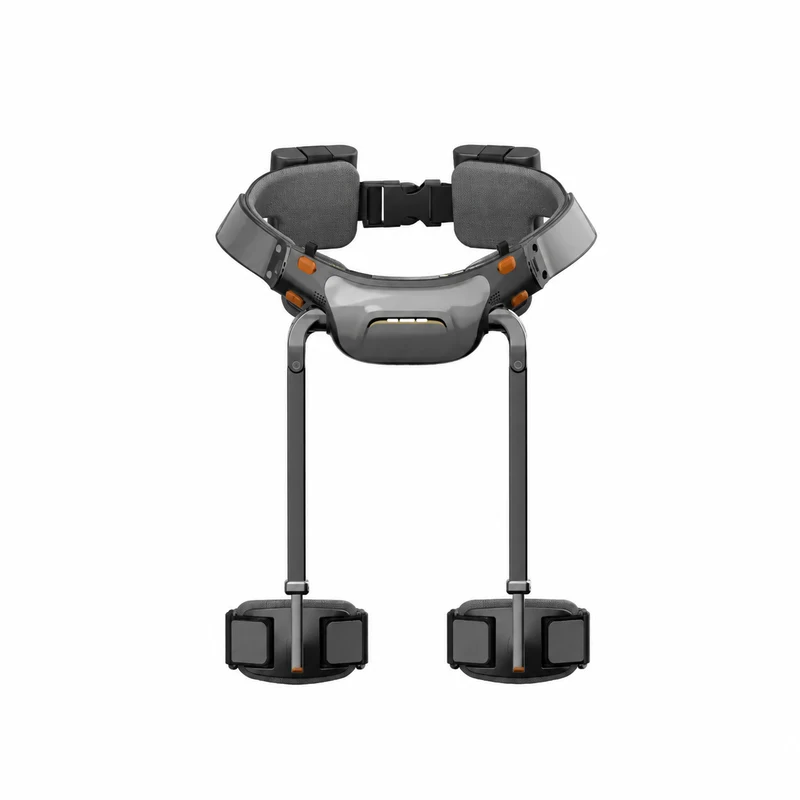
A rollator provides an external support frame; some models also offer a seat for rests. Exo Motion Pro provides hip assistance while the wearer still walks and maintains their own balance. It is not a frame, a seat or full body-weight support. If balance support is the main need, a wearable cannot be assumed to replace it. Healthdirect explains the different roles of mobility aids.
| Decision point | Rollator or other prescribed aid | Exo Motion Pro |
|---|---|---|
| Support required | Consider external support, balance, a rest seat and the ability to manage handles and brakes on the chosen model. | Consider powered hip assistance only for a suitable independent walker. It does not supply external balance support or a seat. |
| Meaningful activity | Record whether the current aid already allows the person's usual activity and where a need remains unmet. | Record whether assistance adds a useful, observed benefit to that same activity, without removing prescribed safeguards. |
| Practical use | Check fit, handling, storage and the suitability of the aid and route with the responsible professional. | Include belt and strap fit, controls, donning and removal, charging and help required. A device can be unsuitable despite a positive short trial. |
| Whole cost | Obtain an actual quote for the suitable alternative, including fitting and any ongoing costs. Do not invent a generic comparison price. | A$2,499 unit + A$80 delivery = A$2,579 delivered. Include any separately charged clinical work and any confirmed ongoing costs. |
What would justify the additional cost?
The advisor should identify what the less costly suitable option does not address, using their own observations and the participant's goals. Record the task, usual support, rest needs, comfort, help required and any reasons to stop. Compare like-for-like activities and conditions where safe. Do not remove a prescribed aid or test stairs simply to produce a stronger application.
An observed difference still needs interpretation: was it useful to the person, repeatable enough for a recommendation, and likely to matter in daily life? State uncertainty, mixed feedback and tasks not tested. Do not claim reduced care hours, prevented falls or better independence unless the evidence actually supports those claims.
Three possible conclusions
- The existing or a lower-cost aid is sufficient. There may be no demonstrated need for the additional purchase.
- A suitable wearable may address a separate unmet need. Explain the specific additional benefit, risks, total cost and how existing support remains in place.
- The person needs a different support or more assessment. Do not treat an exoskeleton as the default answer to declining walking ability.
Preference, appearance and a customer's video do not establish value for money. A clinician's recommendation and a supplier quote also do not approve funding. Review all NDIS funding criteria and the ordering pathway before committing to purchase.
A discussion checklist for a guided demonstration
This is a supplier discussion aid, not a clinical test protocol. The responsible professional should set the safe activity and decide whether a demonstration is appropriate. Keep existing prescribed aids and supports in place.
- The activity: identify the familiar task, setting and normal support, rather than an arbitrary distance target.
- The fit: note belt position, leg-strap comfort, ease of putting the device on and off, and any unwanted movement.
- The person's account: record their own words about comfort and usefulness, including mixed or negative feedback.
- The help required: note assistance with setup, controls, stopping, removal and charging.
- The limits: identify tasks not attempted, observations still uncertain and any reason the demonstration stopped.
- The next decision: ask whether more information, a different option or a follow-up is needed.
The fitting-observation guide and customer-video checklist can help prepare questions. They do not establish a person's diagnosis or provide a pass/fail result.
A valid reason to stop
Comfort and confidence belong in the evidence.
A demonstration is a chance to find out whether this support suits the person, not a test they have to pass. Someone may dislike the powered sensation, find the fit uncomfortable or feel less confident. Record that feedback as carefully as any benefit.
If it feels uncomfortable or unsettling, pause the demonstration and tell the fitter or supervising professional. Keep prescribed supports in place and seek the treating professional's advice if symptoms or safety concerns arise. Do not push through discomfort to complete a distance or secure funding.
Useful notes include what felt wrong, when it happened, whether the person wanted to stop and what follow-up was advised. A fitter's adjustment is not proof of clinical suitability. The professional may recommend another option or no purchase. There is no obligation to buy following a demonstration.
A guided demonstration is also different from a change-of-mind return. The purchase policy requires an unused unit in its original packaging within seven days of receipt, with customer-paid return postage. Read delivery and return terms; Australian Consumer Law rights remain separate.
Separate supplier facts from professional conclusions
Exo Motion can provide an itemised quote, the published fit and weight information, included support and contact details. The public supplier summary identifies a document limitation: approved directions for use and a complete approved specification sheet have not yet been supplied for that pack. Obtain current documents before finalising supply.
The advisor should use their own findings for recommendations about the person. An editorial video caption, ARTG inclusion or another customer's purchase does not establish effectiveness for a new participant. We have not published private funding decisions as case studies on this page.
Before ordering, ask who needs to receive the evidence, whether the relevant equipment funding is already in the plan and whether anything further must be decided. Check the payment pathway. Exo Motion can coordinate supplier information with consent; it cannot write the professional's findings or approve a claim.
If funding is not available, there is no obligation to buy privately. Consider the professional's advice, the full delivered cost of A$2,579 and the purchase conditions separately. Do not use an approval for someone else as a reason to skip that decision.
Common questions
Why might an NDIS advisor recommend a rollator instead?
A rollator and a hip-assist exoskeleton serve different needs. Keep a prescribed rollator in use unless the responsible clinician advises otherwise. An NDIS request should explain the unmet disability-related goal, the alternatives considered, the observed benefit and total cost for this person. If a less costly suitable aid meets the same need, the evidence must acknowledge that; preference for a wearable alone is not sufficient.
Do I need an OT report for an NDIS exoskeleton?
NDIS guidance accepts written mid-cost evidence as a letter, email or report from an appropriate advisor. A formal high-cost assessment is not automatically required, but the person may still need professional assessment and risk advice.
Do customer videos prove an exoskeleton is reasonable and necessary?
No. Videos can prompt useful questions, but they do not establish another person's suitability, clinical outcome or funding eligibility. Evidence must address the individual and the proposed support.
Can Exo Motion write the clinical recommendation?
Exo Motion can provide supplier facts, a quote and practical information with consent. The responsible professional must make their own assessment and recommendation; Exo Motion cannot approve NDIS funding.
What if it does not feel right during the trial?
Pause the demonstration and tell the fitter or supervising professional if the assistance feels uncomfortable or unsettling. Do not push through discomfort. Keep prescribed supports in place and seek professional advice for symptoms or safety concerns. Record the concern so your advisor can consider another option. There is no obligation to buy after a demonstration.
Continue your funding discussion
- NDIS exoskeleton funding overview
- NDIS Category 05 and an exoskeleton purchase.
- Buying an exoskeleton with a managed NDIS plan.
- Evidence for an NDIS exoskeleton request.
Do not send participant numbers or medical records through the public enquiry form. Agree consent and a suitable communication channel first.
Official sources
Use current official guidance alongside your own plan. Exo Motion is the supplier, not the funding decision-maker.
- what mid cost or high cost assistive technology
- how prepare evidence participants assistive technology assessment
- what reasonable and necessary
- guide assistive technology
Editorial responsibility: Christopher Fang, Exo Motion Pty Ltd. This is a supplier-authored guide. No named independent clinical review has been published for this page; it is not an assessment or prescription for an individual.
Supplier editorial update . Check individual requirements with your advisor and plan team.