What do you want to keep doing?
Let your parent choose the goal. Their motivation and comfort matter more than the family's enthusiasm for the technology.
For sons, daughters and families
If Mum or Dad is finding familiar walks harder, begin with their goals and appropriate professional advice. New or worsening walking difficulty should be discussed with a health professional before trying equipment. For suitable independent walkers, we can then bring Exo Motion to an eligible Sydney home for a free product demonstration, fitting and guided trial.
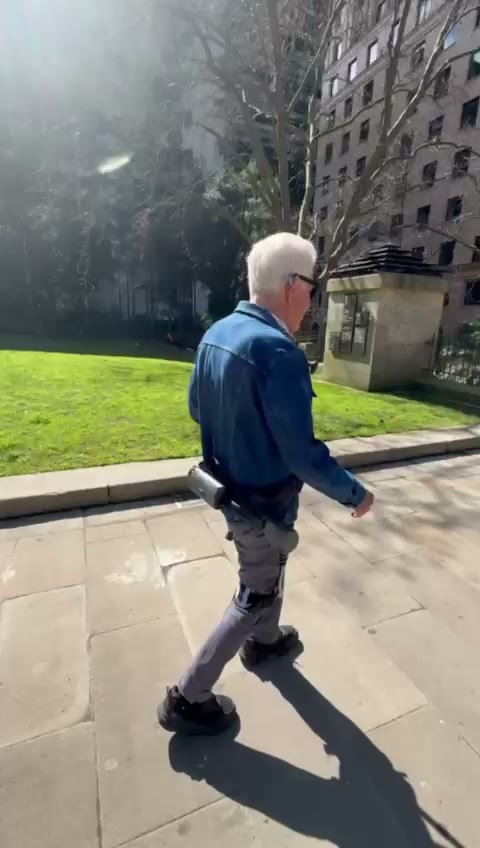
Customer footage can show how a device is worn in an everyday setting. It cannot establish that another person will have the same result. Keep the focus on your parent's current walking ability, comfort, support needs and advice from their own clinician.
Start with the person
Families often contact Exo Motion after noticing that an older parent still wants to walk but is doing less because longer distances, gentle slopes, suitable stairs or fatigue have made outings feel harder. The concern is understandable. The useful next step is not to assume that a wearable robot will solve every mobility problem. It is to identify one or two activities that matter and assess the product carefully.
Exo Motion Pro is a lightweight hip-assist wearable robot. It is worn around the waist and legs and provides powered assistance while a suitable user walks. It is designed for selected people who can already walk independently. It does not lift a person from a chair, provide full body-weight support or replace a prescribed walker, wheelchair, physiotherapy, medical care or supervision.
A practical goal might be walking through the local shopping centre with family, returning to part of a usual park route, spending more time in the garden or approaching suitable stairs with appropriate support. The same device will not feel the same for every person, and individual results vary. That is why Exo Motion offers a free consultation and Sydney home visit before families make a purchase decision.
A useful first conversation
Let your parent choose the goal. Their motivation and comfort matter more than the family's enthusiasm for the technology.
The product assists an existing walking pattern. It is not intended for someone who needs full physical support to stand or walk.
Think about surfaces, slopes, stairs, crowds, weather, transport and whether another person will be nearby during early use.
Do not remove a prescribed aid without professional advice. Record when and why a stick, walker, rail or wheelchair is currently used.
Recent falls, dizziness, pain, weakness, skin concerns or a change in health should be discussed with the treating team before a trial.
A familiar environment and family attendance can make it easier to assess fit, instructions and everyday relevance without sales pressure.
The questions behind the search
Begin with the change you have noticed, not a product name. A walking difficulty can have different causes; a wearable device is not a diagnosis or a substitute for professional advice.
Talk with your parent about the actual difficulty: lifting a foot, discomfort, balance, fatigue or concern about falling. Keep the handrail and prescribed supports in use. Discuss the staircase, lighting, surfaces and supervision with the treating professional or OT before trying a different device.
In Bert's stairs-at-home video, the handrail remains part of the activity. The clip gives your family questions to ask; it does not show that another person can safely manage the same task, prevent falls or stop using an aid.
Note which familiar activity has become harder, where rests are needed and whether the change is recent. Bring those observations to the person's clinician. Do not assume a shorter walking distance is simply ageing or that powered assistance will resolve the cause.
Bert's community walk and the incline session show individual examples, not measured endurance gains. A useful demonstration asks about comfort and a meaningful activity, not whether the person can reproduce a video.
Healthdirect describes balance changes, weakness, pain and home hazards among factors that can affect older people's safety. Seek professional advice about new or worsening walking problems; do not begin a staircase trial to test them. Read Healthdirect's guidance for older people and falls.
Free Sydney home visit
Share the intended user's walking goals, height, weight, location and any support concerns. Please do not send sensitive medical records through the web form.
Exo Motion confirms the Sydney service area, basic suitability, appointment time and who will attend. There is no payment or purchase obligation for the visit.
We adjust the belt and leg straps, explain the controls and confirm comfort before assisted walking begins.
The user starts on a suitable controlled surface. Family or carers can observe how the person responds and whether extra supervision is needed.
We review fit, comfort, intended activities, charging, support and what the product does not replace. Individual experiences vary.
Consider private purchase or AT-HM documentation for provider review. You do not need to decide during the fitting.
Free consultation, eligible Sydney home visit, fitting and training, subject to suitability and appointment availability.
Bert, aged 90, is shown on a community walk with Exo Motion. His clips were shared with consent. During this filmed session he walks without relying on his cane; this is not advice for another person to stop using an aid.
If a parent has stopped going for walks, ask what changed and which outing they would value. A short clip does not tell you the cause of fatigue, the assistance another person needs or whether an exoskeleton is appropriate.
Read Bert's story and the limits of the evidence, then share the relevant questions with the treating professional. See the stairs-at-home clip without assuming the same activity is safe for your parent.
What to observe
Does the belt remain positioned correctly? Are the leg straps comfortable? Is there rubbing, pressure or interference with clothing?
Can the user remember the start, stop and basic operating guidance? Would a family member or carer need to help with fitting?
Does the assistance feel natural after a short familiarisation period? What does the user notice on flat ground, gentle slopes or suitable stairs?
Does the product help with the specific activity the person values, rather than only feeling interesting during a brief demonstration?
What level of oversight is sensible during setup and use? Can that support be provided consistently at home or in the community?
Can the household manage charging, fitting, storage and support calls? Is the benefit sufficient for the purchase price or funding process?
Understanding the role
| Option | Primary role | Important distinction |
|---|---|---|
| Walking stick or hiking pole | Hand-held contact and support. | Exo Motion is worn at the hips and legs and provides powered assistance; it does not provide a hand-held balance point. |
| Walker or rollator | Broader external support, often with brakes or a seat. | Exo Motion does not replace prescribed stability support and should not be treated as equivalent. |
| Wheelchair or mobility scooter | Seated mobility when walking is limited or not appropriate. | Exo Motion is for a person who can already walk independently and wants to keep walking. |
| Physiotherapy or rehabilitation | Clinical assessment, treatment and goal-directed therapy. | Exo Motion is a product, not a treatment program or substitute for clinical care. |
| Exo Motion Pro | Wearable powered hip assistance during walking. | Suitability, fit, user understanding and the real-world goal must be assessed individually. |
After the free visit
The price is A$2,499.
Give Exo Motion written consent and the details of Mum or Dad's care manager or Support at Home provider. We can contact them, send the quote and supporting product documents, answer questions and follow up. Funding and any contribution still depend on individual assessment and approval.
If your parent is an NDIS participant, discuss disability-related equipment funding with their AT advisor and plan team. Age or difficulty walking does not by itself establish eligibility. Do not transfer aged-care AT-HM item 12 02 into an NDIS claim.
When professional input matters
A family can enquire about a product demonstration, but some decisions should not be made from a web page alone. Ask an occupational therapist, physiotherapist, GP or relevant treating professional for guidance if there is a history of falls, rehabilitation after hospital, progressive neurological or musculoskeletal conditions, significant balance difficulty, pain, cognitive change or uncertainty about existing mobility aids.
Exo Motion works with allied-health and aged-care professionals by providing product information, trial support, fitting notes and quotations. Infinity Allied Healthcare Chatswood is part of our allied-health partner network for suitability discussions and referrals. Clinical assessment and treatment decisions remain independent.
Family FAQ
Discuss the change with their treating professional before buying a device. Keep prescribed aids and handrails in use. A demonstration may help assess fit for a suitable independent walker, but it cannot diagnose the cause or guarantee safer stairs or longer walks.
Exo Motion Pro does not restore lost walking ability. It is intended for selected adults who can already walk independently and want powered assistance during walking. A free guided home visit can help your family assess fit, comfort and practical usefulness.
The product is not suitable for someone who cannot walk independently, is over 190 cm, is outside 40 kg to 150 kg, cannot follow fitting guidance or needs full body-weight support. Health, balance or falls concerns should be discussed with an appropriate professional.
No. Do not stop using a prescribed mobility aid based on marketing or a short trial. A clinician should decide whether any existing aid changes. Exo Motion has a different role: it provides wearable hip assistance while a suitable person walks.
Exo Motion discusses basic suitability, brings the unit to an eligible Sydney home, completes personal fitting and guides a short trial and training session. The visit is free and there is no purchase obligation.
Possibly, after individual assessment and provider approval. With written consent, Exo Motion can contact the nominated care manager or Support at Home provider, coordinate product information, trial notes and the quotation, and follow up. The provider controls assessment, ordering and any government submission; Exo Motion does not approve funding or guarantee that the product will be free or fully funded.
If funding is not approved, a suitable customer can consider private purchase at A$2,499. Start with a free eligible Sydney consultation, home visit, fitting and guided trial before deciding. There is no purchase obligation. Any funded purchase requires written provider approval.
Exo Motion Pro costs A$2,499 plus A$80 delivery, A$2,579 total for one unit. Personal fitting, training and a 12-month written warranty are included, in addition to applicable Australian Consumer Law rights.
You do not need to understand the technology before asking who can help with assessment, equipment questions or provider documents.
Questions about private payment, assessed funding and what the family may need to contribute.
Product details, consent, fitting notes and ordering questions for the care manager or OT.
Understand the category discussion without assuming that a particular product is approved.
Once you have discussed the person's needs with their clinician, the Australian exoskeleton buyer guide can help you compare fitting, purchase costs and support arrangements.
Choose the guide that matches your next decision. The self-check provides information, not a funding approval.